Refugee Week resources for primary schools
Here you can find our pack of classroom resources and learning activities to use in schools and at home, reviewed and updated for Refugee Week 2026.
Our Refugee Week resources are suitable for primary school children and is most suitable for children at KS2. However, activities can be adapted for children at KS1.
The learning materials in the resource pack have been created and updated with input and feedback from the pupils and staff at Seymour Park Community Primary School, one of our longstanding partners in the UK, and draws on our 10 years’ experience as a children’s arts and circus charity working with young people affected by the refugee crisis.
This year’s primary school resource pack can be viewed on Google Drive here, and you can read more below about The Flying Seagull Project’s work promoting children’s right to play regardless of their background or circumstances.
Questions, feedback or requests for any material in other formats can be sent by email to Tania Skae, The Flying Seagull Project’s executive director.
We’d like to send our thanks to all at Seymour Park – with a special Seagull Salute to their Rights Rangers – for all their brilliant and inspiring support over the years, and for their help creating our Refugee Week classroom resources.
When is Refugee Week?
In 2026, Refugee Week runs from Monday 15th to Sunday 21st June, covering World Refugee Day on Friday 19th June.
What is Refugee Week?
Refugee Week started in 1998 in the UK, as an event to honour the resilience and dignity of people who have been displaced from their homes and forced to seek refuge. It takes place annually to coincide with World Refugee Day, which is an international occasion designated by the United Nations to highlight the situations facing displaced people worldwide.
What is the theme for Refugee Week 2026?
This year, the theme for Refugee Week is “courage”. This theme celebrates the resilience and bravery of refugees navigating unknown journeys and rebuilding their lives, and aims to inspire daily acts of connection and welcome within local communities..
How can you get involved in Refugee Week?
The organisers of Refugee Week encourage people to attend local community events that have been organised to mark Refugee Week. The organisers have a helpful calendar of events here, which you can search by location, date, time, and type of event.
As a children’s charity that works with many young refugees, one way The Flying Seagull Project marks the week is by providing learning resources for use in schools, youth groups and at home. These resources aim to encourage children to think about others’ situations with empathy, and consider how the experience of displacement might cause young people to miss out on important parts of childhood, such as play, friendship and education.
About The Flying Seagull Project and our Refugee Week schools resources
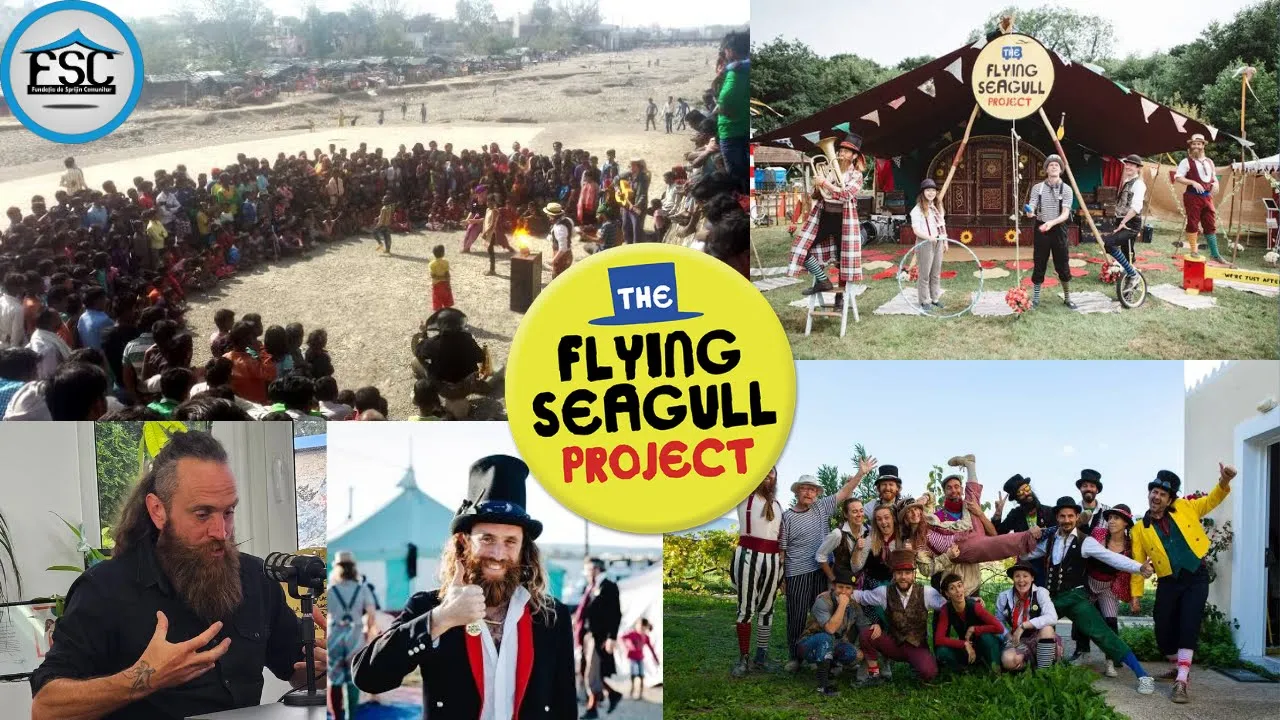
We’re a UK-based children’s arts and circus charity. Since we were founded in 2008, we’ve shared more than 550,000 smiles, laughs and magic memories for children experiencing hardships.
As well as our work in the UK, we’ve worked in 23 countries overseas, across four continents.
Since the start of the refugee crisis in Europe and the Middle East around 2015, one of our major missions has been bringing relief and rehabilitation to child refugees through play, games and laughter.
Our Refugee Week resources for primary schools draw on our decade of experience working with children of similar ages who’ve experienced forced displacement, are growing up in refugee camps or are going through the long and difficult process of resettlement after reaching a safer country.
Our work in the UK and across the globe is based on our belief that every child should not only have the right to safety and basic essentials, but must also grow up in an environment where they can flourish and make lifelong happy memories that help them grow into healthy, confident adults.
Based on our experience and the science of childhood development, we believe this means that every child needs a daily routine filled with play, laughter, respect and friendship. But in our work with child refugees, we see far too many young people instead shouldering a burden of premature adulthood.
Our Refugee Week resources for primary schools aim to present the situations experienced by child refugees in a sensitive and informative way.
The suggested activities and included classroom resources provide fun, educational and creative activities that will encourage primary school children to learn and think about the experiences of child refugees with empathy.